
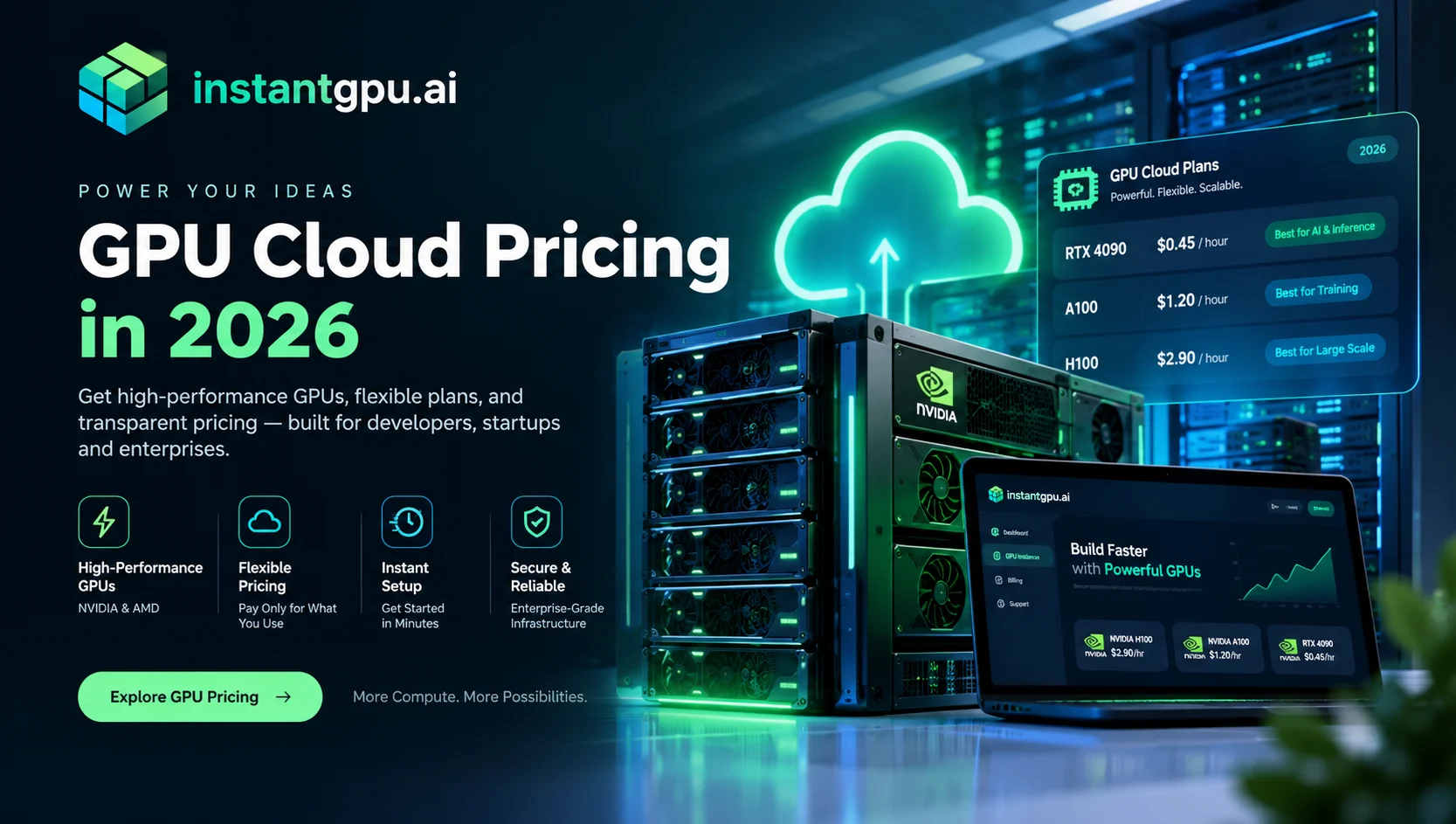
GPU Cloud Pricing in 2026: Why On-Demand Hyperscaler Rates Aren't the Real Market Price
Ask most teams what an H100 costs and they’ll quote a hyperscaler’s on-demand rate — somewhere north of $12 per GPU per hour. That number is accurate. It’s also not the price most workloads need to pay, because on-demand hyperscaler pricing reflects one narrow slice of a much larger GPU supply market.
GPU cloud pricing in 2026 is not one number. It’s a spread — sometimes a 4-5x spread — depending on whether you’re buying reserved capacity from a single hyperscaler, or sourcing from a wider network of GPU providers competing on price and availability in real time. This piece breaks down what actually drives that spread, what real current pricing looks like across GPU types, and how to think about picking a rate instead of just accepting the first number you see.
Why GPU Availability Breaks Down on Single-Provider Clouds
Chip supply constraints
High-demand GPU types — H200, B200, the newest hardware generations — face genuine chip-level supply constraints. Manufacturing capacity gets prioritized toward the newest architecture, memory costs rise, and cloud providers pass scarcity pricing straight through to on-demand rates. This is real and it isn’t going away soon.
Reservation structures inflate the “sticker price” you’re shown by default
A large share of hyperscaler on-demand pricing exists because most high-end capacity is locked up in 1-3 year reservation contracts, leaving a thin, expensive slice available for pay-as-you-go access. Also, The rate you see when you spin up an on-demand instance isn’t the market-clearing price for the hardware — it’s the price for the leftover capacity nobody pre-committed to.
Single-provider pricing reflects one fleet, not the market
A single cloud’s rate card is set by that cloud’s own capacity, its own margin structure, and its own regional footprint — not by what the GPU actually costs to access elsewhere. Comparing rates across a wider set of providers routinely surfaces a large gap between the “default” price and the real one.
What GPU Cloud Pricing Actually Looks Like Right Now
The table below reflects live, per-hour pricing sourced across a network of connected GPU providers — not a single hyperscaler’s rate card, and not a quote you have to request:
| GPU | VRAM | Best For | $/hr From |
| NVIDIA B200 | 179GB | Frontier LLM training & long-context inference | $6.25/hr |
| NVIDIA H200 NVL | 140GB | Frontier LLM training & long-context inference | $3.21/hr |
| NVIDIA H100 SXM | 80GB | Large model training & high-throughput inference | $2.82/hr |
| NVIDIA H100 PCIe | 80GB | Large model training & high-throughput inference | $2.47/hr |
| NVIDIA A100 PCIe | 80GB | Large model training & high-throughput inference | $1.59/hr |
| NVIDIA A100 SXM4 | 40GB | Fine-tuning, mid-size training, inference | $0.696/hr |
| NVIDIA L40S | 45GB | Fine-tuning, mid-size training, inference | $0.535/hr |
| NVIDIA RTX 4090 | 24GB | Image/video generation, mid-tier AI workloads | $0.513/hr |
Two things worth noticing here. First, the range: from under $0.10/hr for entry-level cards up to the high single digits for frontier hardware — over 100 GPU types are priced individually, not bucketed into a handful of instance sizes. Second, these are live figures pulled from active provider capacity, updated continuously, not a quarterly-refreshed rate card.
Why the Gap Between "Sticker Price" and Real Price Is So Large
Published on-demand hyperscaler pricing for top-tier GPUs like the H100 commonly runs well into double digits per GPU-hour. Sourcing the same GPU class across a broader, competitively-priced provider network can land at a fraction of that rate for comparable hardware. That gap isn’t a rounding error — it can be the difference between a project that’s economically viable at scale and one that isn’t.
Further, This happens because on-demand hyperscaler pricing is priced for convenience and guaranteed capacity within one ecosystem, while a multi-provider marketplace model prices GPUs closer to what the underlying hardware actually costs to access, because providers are competing for your workload rather than holding a fixed rate card.
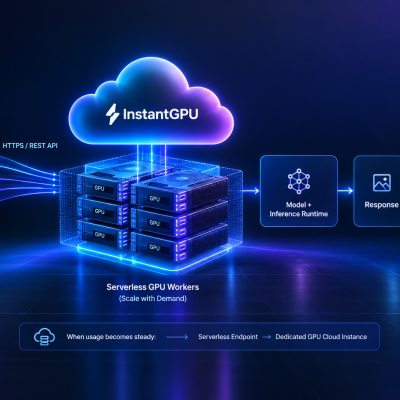
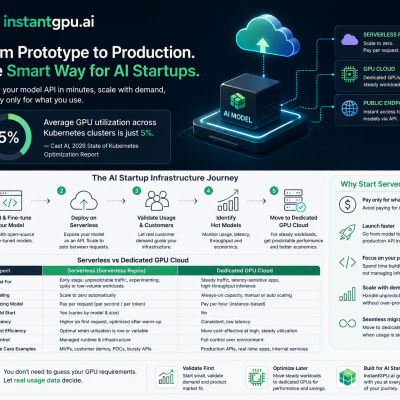
GPU Cloud Pricing vs. Serverless Pricing: Which Model Fits Your Workload
| GPU Cloud (per-hour) | Serverless (per-second) | |
| Billing unit | Hourly, for the full duration the instance runs | Per second of actual execution |
| Idle cost | You pay until you stop or schedule the instance off | $0 — scales to zero automatically |
| Best for | Long-running training, fine-tuning, dedicated workloads | Event-driven inference with unpredictable traffic |
| Control level | Full SSH/VM access | API endpoint, no infrastructure management |
Practical Ways to Lower Your Effective GPU Cloud Cost
Match the billing model to the workload shape. Don’t run a bursty, unpredictable inference workload on hourly billing — the idle time between requests is pure waste.
Use scheduled stop/start for training workloads. A GPU Cloud instance running a fine-tuning job doesn’t need to stay live overnight or on weekends if the job isn’t running.
Price-check across GPU types, not just within one. A workload that needs 80GB of VRAM has multiple hardware options at meaningfully different price points — the newest chip isn’t always the requirement.
Compare live rates before committing. A rate card that hasn’t updated in months isn’t reflecting current market conditions on either side — supply or price.
GPU Cloud Pricing Frequently Asked Questions
How much does GPU cloud pricing actually vary?
GPU cloud pricing can vary by several multiples depending on the source — hyperscaler on-demand rates for hardware like the H100 can run several times higher than rates available through a broader, competitively-priced provider network for comparable hardware.
Is per-hour or per-second GPU billing cheaper?
Neither is inherently cheaper it depends on the workload. Per-hour billing suits long-running, continuously-active jobs like training or fine-tuning. Per-second billing with scale-to-zero suits event-driven inference with gaps between requests, since you stop paying the moment execution ends.
Why do GPU prices vary so much between providers?
Pricing differs based on reservation structures, regional capacity, and how much of a provider’s fleet is locked into long-term contracts versus available on-demand. A single provider’s rate card reflects that provider’s specific capacity and margin, not the broader market rate for the hardware.
What's the cheapest way to access high-end GPUs like the H100 or H200?
Comparing live rates across a wide network of GPU providers, rather than accepting a single provider’s default on-demand rate, typically surfaces significantly lower pricing for the same or comparable hardware class.
Does GPU cloud pricing change over time?
Yes — GPU pricing shifts with chip supply, demand cycles, and how much capacity is tied up in reservations at any given moment. Rates sourced live from active provider capacity reflect current conditions more accurately than a static, periodically-updated rate card.
GPU Cloud Pricing The Bottom Line
Moreover, The number most teams quote as “GPU cloud pricing” is really just one provider’s on-demand rate — the price for whatever capacity wasn’t already locked into a reservation. It’s accurate, but it’s not the whole market. Sourcing across a wider network of GPU providers, with live pricing across 100+ GPU types and billing models matched to how you actually run workloads, is where the real savings show up — often without changing anything about the model or the job itself.